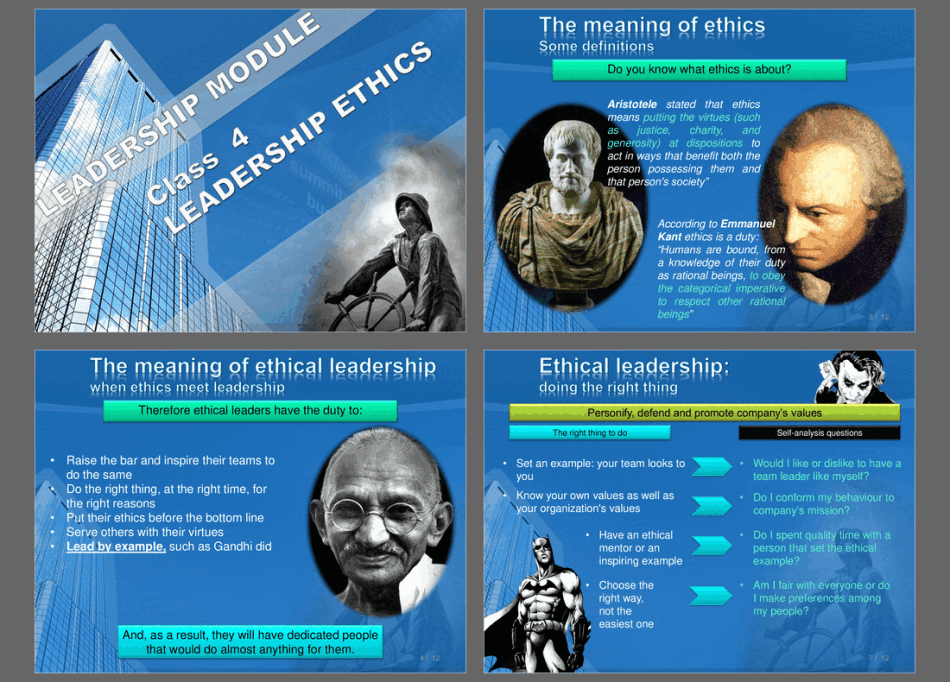
This presentation is part of a full leadership course, which encompasses 8 PowerPoint presentations (including slides notes), a syllabus, a self-evaluation test, and a role game. The entire course is designed in order to provide not only a theoretical background on leadership, but also useful tools that can be practically applied in the working environment.
The uniqueness of this course is that it brings together both corporate leadership and military leadership tools, having been designed by senior Corporate Managers who are also former naval Officers.
Please find below the content of this part of the course:
4. CLASS 4 Leadership ethics
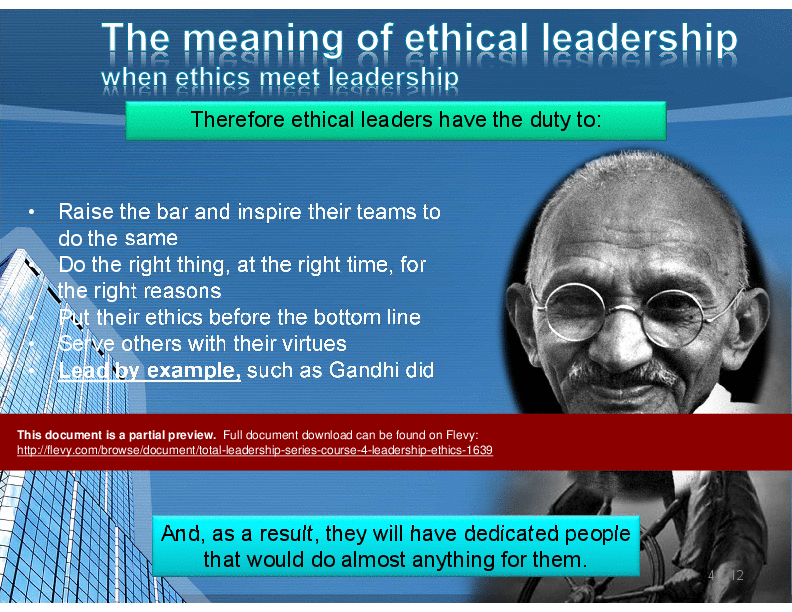
4.1. The meaning of ethical leadership
4.2. Leading by example: Mahatma Gandhi
4.3. VIDEO. Mahatma Gandhi leadership (5 mins)
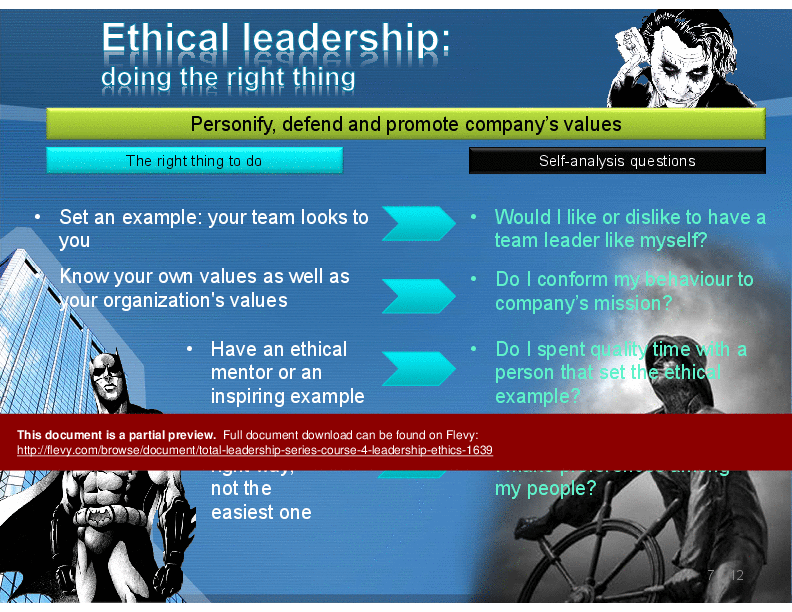
4.4. Ethical leadership: doing the right thing
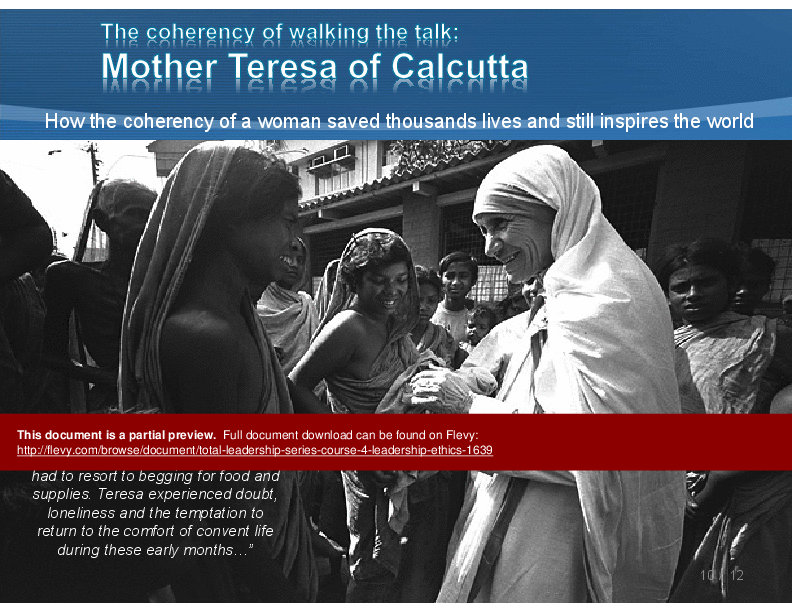
4.5. The coherency of walking the talk:
• Mother Teresa of Calcutta
• Oskar Shindler
4.6. Ethics, leadership and storytelling
4.7. VIDEO. Great storytelling in 2 minutes.
This PowerPoint includes slide notes (not displayed in the above preview). It also includes the course syllabus as the secondary document.
This course emphasizes the critical role of ethical leadership in today’s business environment. It challenges leaders to not only understand ethical principles, but to embody them in their daily actions. The focus on real-world examples, such as Mahatma Gandhi and Mother Teresa, illustrates how ethical leaders inspire their teams and foster a culture of integrity. Participants will learn to set a standard that encourages their teams to align with the organization's values and mission.
The inclusion of self-analysis questions prompts introspection, pushing leaders to evaluate their own behaviors and decisions. This reflective practice is essential for personal growth and effective leadership. By integrating storytelling techniques, the course equips leaders with the tools to communicate their ethical vision compellingly, ensuring that their message resonates and inspires action within their organizations.
Got a question about the product? Email us at support@flevy.com or ask the author directly by using the "Ask the Author a Question" form. If you cannot view the preview above this document description, go here to view the large preview instead.
Executive Summary
The Total Leadership Series (Course 4) focuses on Leadership Ethics, offering a comprehensive exploration of ethical leadership principles. This presentation is designed for corporate executives and leaders looking to enhance their ethical decision-making and leadership skills. By utilizing real-world examples, storytelling techniques, and self-evaluation tools, participants will learn how to inspire their teams, promote ethical values, and navigate ethical dilemmas effectively. Download this course to empower your leadership journey and foster a culture of integrity within your organization.
Who This Is For and When to Use
• Corporate executives aiming to strengthen their ethical leadership capabilities
• Team leaders looking to inspire ethical behavior within their teams
• HR professionals focused on integrating ethical practices into organizational culture
• Consultants advising organizations on leadership development and ethics
Best-fit moments to use this deck:
• Leadership training sessions focused on ethical decision-making
• Workshops aimed at developing a culture of integrity within teams
• Strategic planning meetings where ethical considerations are paramount
• Onboarding programs for new leaders to instill ethical values from the start
Learning Objectives
• Define ethical leadership and its significance in organizational contexts
• Build a framework for ethical decision-making using real-world examples
• Establish self-evaluation techniques to assess personal ethical standards
• Identify and navigate ethical dilemmas in leadership scenarios
• Promote a culture of ethics through storytelling and leading by example
• Inspire teams to adopt ethical practices and values in their work
Table of Contents
• The Meaning of Ethical Leadership (page 2)
• Leading by Example: Mahatma Gandhi (page 5)
• Ethical Leadership: Doing the Right Thing (page 7)
• The Coherency of Walking the Talk: Mother Teresa of Calcutta (page 10)
• The Power of Ethics: Oskar Schindler (page 11)
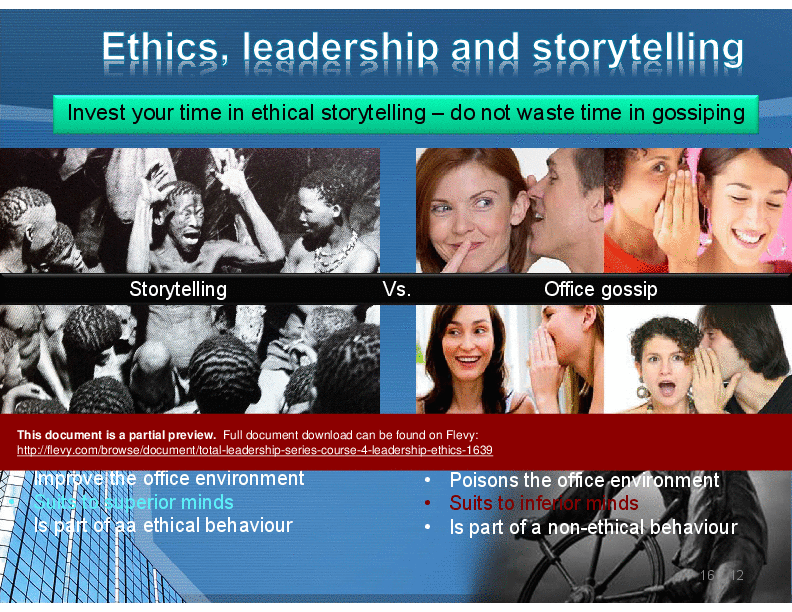
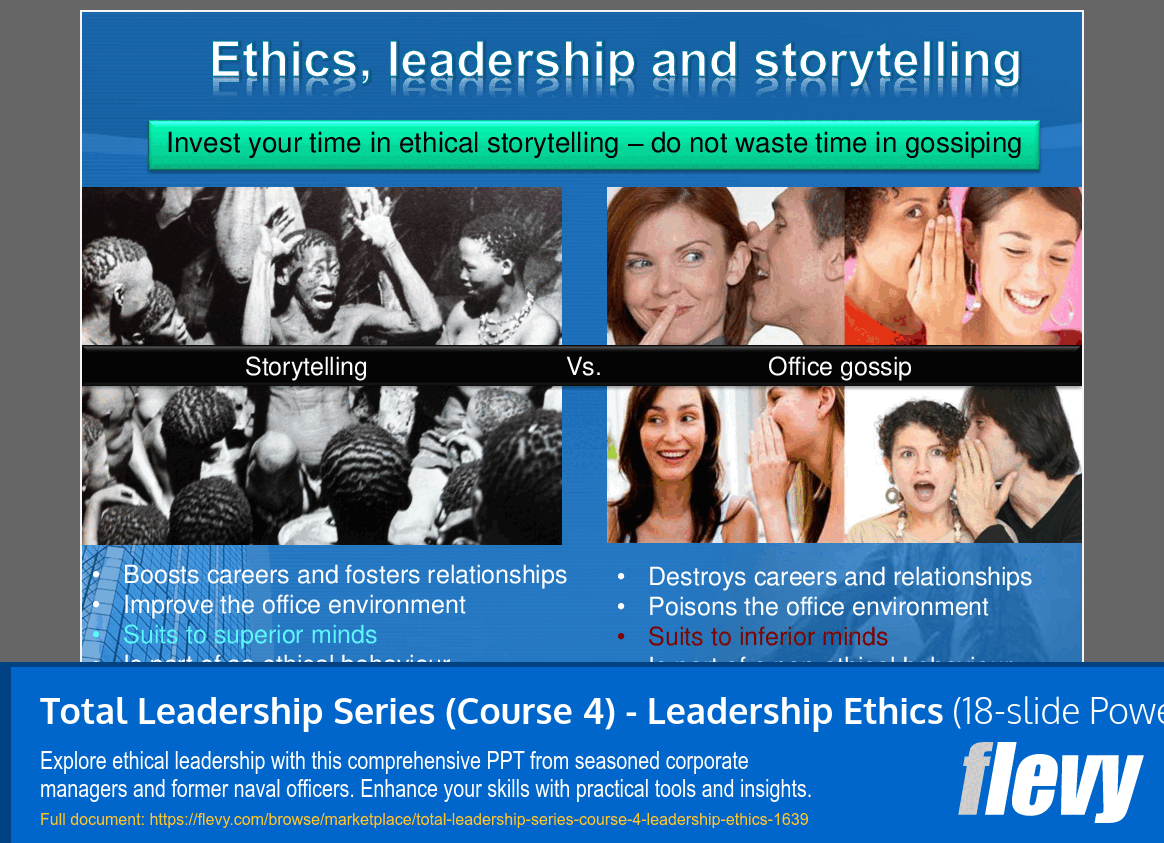
• Ethics, Leadership, and Storytelling (page 13)
• Closing Takeaways (page 17)
Primary Topics Covered
• Ethical Leadership Definition - Ethical leadership involves raising the bar for oneself and others, prioritizing ethics over profit, and serving the team with integrity.
• Leading by Example - Leaders like Mahatma Gandhi exemplify ethical leadership through their actions, inspiring others to follow suit.
• Self-Analysis in Ethical Leadership - Leaders are encouraged to reflect on their values and behaviors to align with their organization's ethical standards.
• Coherency and Ethics - Ethical leaders must demonstrate consistency in their actions and decisions to effectively resolve dilemmas.
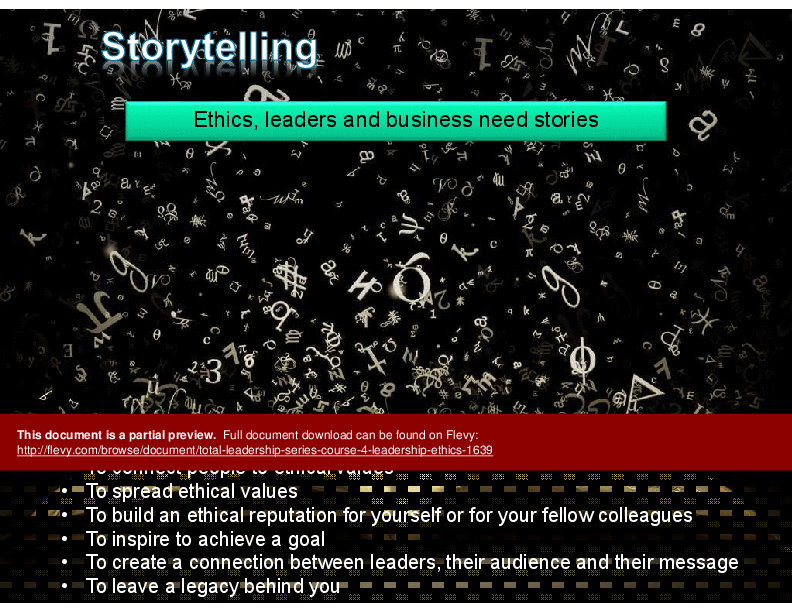
• Storytelling as a Leadership Tool - Utilizing storytelling helps connect ethical values to practical applications, fostering a shared understanding among team members.
• Case Studies of Ethical Leaders - The presentation highlights figures like Mother Teresa and Oskar Schindler, showcasing how their ethical choices made significant impacts.
Deliverables, Templates, and Tools
• Self-evaluation templates for assessing personal ethical standards
• Case study examples of ethical leaders for discussion
• Storytelling frameworks to convey ethical values
• Guidelines for conducting ethical leadership workshops
• Reflection prompts for leaders to analyze their decision-making processes
• Action plans for implementing ethical practices within teams
Slide Highlights
• Overview of ethical leadership principles and their importance
• Inspiring quotes and anecdotes from Mahatma Gandhi and Mother Teresa
• Visual representations of ethical dilemmas and decision-making frameworks
• Storytelling techniques that connect ethics to leadership practice
• Closing takeaways emphasizing the courage to lead ethically
Potential Workshop Agenda
Introduction to Ethical Leadership (30 minutes)
• Define ethical leadership and its significance
• Discuss the role of ethics in decision-making
Case Study Analysis (45 minutes)
• Review the leadership styles of Mahatma Gandhi and Mother Teresa
• Group discussion on lessons learned from their examples
Self-Evaluation and Reflection (30 minutes)
• Participants complete self-assessment templates
• Share insights and personal commitments to ethical leadership
Storytelling Techniques (30 minutes)
• Explore how storytelling can reinforce ethical values
• Develop personal stories to share with teams
Customization Guidance
• Adapt the self-evaluation templates to reflect specific organizational values and goals
• Incorporate relevant case studies from the organization’s industry to enhance relatability
• Modify storytelling frameworks to align with the company’s communication style
• Adjust workshop agendas to fit the time constraints and objectives of the audience
Secondary Topics Covered
• The role of ethics in corporate governance
• Strategies for fostering an ethical workplace culture
• The impact of ethical leadership on employee engagement and retention
• Ethical considerations in decision-making processes
Topic FAQ
Document FAQ
These are questions addressed within this presentation.
What is ethical leadership?
Ethical leadership is the practice of leading with integrity, prioritizing ethical considerations over profit, and inspiring others to uphold the same values.
How can storytelling enhance ethical leadership?
Storytelling connects ethical values to real-life scenarios, making them more relatable and inspiring for team members, thereby reinforcing a culture of ethics.
What are some examples of ethical leaders?
Mahatma Gandhi and Mother Teresa are prime examples of ethical leaders who demonstrated integrity, compassion, and commitment to their values.
How can I assess my ethical leadership skills?
Utilize self-evaluation templates that prompt reflection on your values, decision-making processes, and alignment with organizational ethics.
What role does self-analysis play in ethical leadership?
Self-analysis allows leaders to identify areas for improvement, ensuring their actions align with their ethical standards and organizational values.
How can I implement ethical practices in my team?
Encourage open discussions about ethics, provide training on ethical decision-making, and lead by example to foster a culture of integrity.
What are the challenges of ethical leadership?
Challenges include navigating ethical dilemmas, maintaining consistency in decision-making, and addressing conflicts between personal and organizational values.
How can I inspire my team to adopt ethical practices?
Share personal stories of ethical decision-making, recognize and reward ethical behavior, and create an environment where ethical discussions are encouraged.
Glossary
• Ethical Leadership - Leading with integrity and prioritizing ethical considerations in decision-making.
• Self-Evaluation - A reflective process to assess personal values and ethical standards.
• Storytelling - A communication method used to convey ethical values and inspire action.
• Coherency - The alignment between a leader's actions and their stated values.
• Ethical Dilemma - A situation where a difficult choice must be made between competing ethical principles.
• Case Study - An in-depth examination of a real-life example to illustrate ethical leadership principles.
• Values - Core beliefs that guide behavior and decision-making.
• Integrity - Adherence to moral and ethical principles.
• Compassion - Empathy and concern for the well-being of others.
• Inspiration - The process of motivating others to take action based on shared values.
• Reflection - The act of thinking critically about one's actions and decisions.
• Culture of Ethics - An organizational environment that promotes ethical behavior and decision-making.
Source: Best Practices in Business Ethics PowerPoint Slides: Total Leadership Series (Course 4) - Leadership Ethics PowerPoint (PPTX) Presentation Slide Deck, Total Quality Management
This document is available as part of the following discounted bundle(s):

Save %!
Total Leadership Series
This bundle contains 9 total documents. See all the documents to the right.
|
Download our FREE Organization, Change, & Culture, Templates
Download our free compilation of 50+ slides and templates on Organizational Design, Change Management, and Corporate Culture. Methodologies include ADKAR, Burke-Litwin Change Model, McKinsey 7-S, Competing Values Framework, etc. |









